
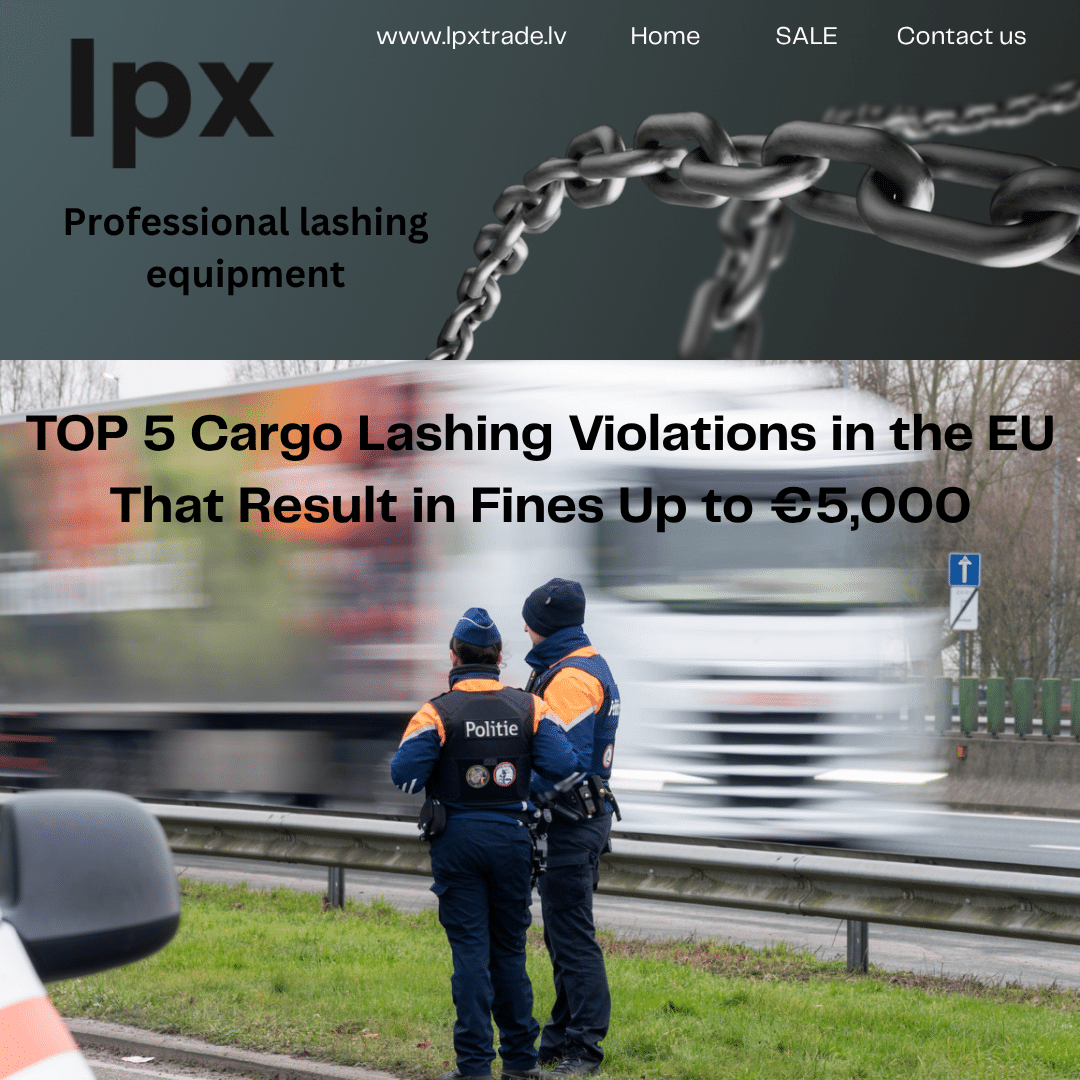
Штрафы за ненадежное крепление грузов в ЕС
Штрафы за неправильное крепление грузов в ЕС достигают €5000 за проверку. Каждый пятый грузовик имеет нарушения. Пять наиболее часто фиксируемых нарушений: недостаточная общая крепежная способность (угол не скорректирован), повреждённые или немаркированные крепежные ремни, отсутствие документации о соответствии, неправильный метод крепления груза и отсутствие повторной проверки после первых 50 км. Почти в половине этих случаев проблему можно было бы устранить за десять минут перед отправлением. Ниже представлены пять нарушений с реальными цифрами, самые строгие страны и способы оставаться в соответствии с EN 12195.
Это не единичный случай. По данным Европейской обсерватории безопасности дорожного движения, один из пяти грузовиков, остановленных в ЕС, имеет нарушение в креплении грузов. В этой статье мы разбираем пять наиболее распространённых нарушений, за которые инспекторы выписывают штрафы — с цифрами, самыми строгими странами и простыми способами оставаться в соответствии с требованиями.
Почему инспекторы ЕС стали строже?
Before 2020, lashing inspections in most EU countries were largely advisory: a warning, then on you go. That changed after stricter road-control directives and a series of accidents linked to unsecured cargo. Today Germany, the Netherlands, Austria and Belgium field specialist enforcement teams (BAG, NVWA and equivalents) trained specifically on lashing — and they carry tools: force gauges, angle meters and ultrasonic strap-defect detectors.
5 нарушений, которые чаще всего штрафуют
Нарушение 1 — Недостаточная крепежная способность
The most frequent and most costly violation. EN 12195-1 requires the total restraint force to counter inertia during braking, acceleration and cornering — at least 50% of cargo mass forward, and 25–30% sideways and rearward. The catch: many drivers add their straps’ nominal LC correctly but ignore the lashing angle. At 30° to the horizontal the effective force is only 50% of nominal; at 45°, about 70%. Inspectors check the angle correction specifically. Get the sum right with our 2-минутный расчет LC и Справочник углов.
⚠ Штраф: €500–€5000 в зависимости от серьёзности и страны. В Германии дефицит LC свыше 30% влечёт автоматический запрет.
✓ Как избежать: Рассчитайте эффективную грузоподъемность с реальными углами перед отправкой; если угол менее 45°, добавьте крепежные точки или используйте крепежные ремни с большей грузоподъемностью.
Нарушение 2 — поврежденное крепежное оборудование
A strap is a consumable. EN 12195-2 sets clear rejection criteria: cuts or abrasion deeper than 10% of the webbing, deformation and tears, illegible labelling, corroded buckles and ratchets, and chemical exposure. Crucially, inspectors also check the marking: if LC, STF or the conformity mark are not clearly readable, the strap counts as unusable regardless of its actual condition — so even a physically intact but worn strap earns a fine. The material and label colour matter too, as we cover in Полипропилен vs полиэстер.
⚠ Штраф: €300–€2500 за единицу — штраф за каждый ремень
✓ Как избежать: Проверяйте каждый крепежный ремень перед использованием, заменяйте при обнаружении дефектов и храните в защитных чехлах.
Нарушение 3 — Отсутствие документации
Это часто застаёт врасплох водителей, уверенных, что всё в порядке. Особенно во Франции, Германии и Австрии инспектор может потребовать сопроводительную документацию — Декларацию соответствия EN 12195-2 или EN 12195-3, а иногда и инструкции по эксплуатации, причём не только сами ремни. Партионный сертификат в офисе ничего не стоит на обочине; на дороге считается только то, что физически находится в кабине.
⚠ Штраф: €250–€3 750. Во Франции штраф за отсутствие документов выписывается даже при правильном креплении грузов.
✓ Как избежать: Сохраняйте Декларацию соответствия для всего оборудования. В LPX Trade документ включен в комплект каждого товара.
Нарушение 4 — неправильный способ крепления груза
EN 12195-1 определяет несколько методов крепления грузов в зависимости от типа груза. Стяжной ремень работает только при достаточном коэффициенте трения — древесина по стали имеет коэффициент около 0,3, древесина на антискользящем коврике около 0,5. Использование стяжного ремня для цилиндрических грузов, таких как трубы или рулоны, без блокирования — типичное нарушение; такие грузы требуют прямого или петельного крепления с блокированием. Выбирайте метод в соответствии с 5 методов крепления грузов.
⚠ Штраф: €400–€2800. Неправильный метод считается системной ошибкой и влечет запрет до исправления.
✓ Как избежать: Узнайте схему крепления грузов перед поездкой Противоскользящие коврики Для гладких поверхностей грузов
Нарушение 5 — Отсутствие проверки после первых 50–80 км
Re-checking lashing after departure is set out in VDI 2700 and in several national rules. Straps relax as the cargo settles — typically 10–25% tension loss over the first 50 km. An inspector cannot see whether you re-checked, but clearly slack straps mid-route are indirect evidence you did not. In Germany and Austria a lashing inspection log is recommended, and at many firms it is already mandatory.
⚠ Штраф: €350–€1500 за косвенное нарушение (в сочетании с недостаточным натяжением).
✓ Как избежать: Остановка через 50 км обязательна: проверьте крепежные ремни и отметьте в маршрутном листе. Сделайте это правилом. контрольный список водителя.
Штрафы за ненадлежащее крепление грузов в ЕС
Суммы варьируются по странам. Текущие диапазоны для основных юрисдикций на основе данных о правоприменении.
| Страна / органы власти | Нарушение | Размер штрафа | Кто платит |
|---|---|---|---|
| Германия (BAG) | Недостаточный аккредитив / неправильный способ | €75 – €5 000 | Водитель + перевозчик |
| Нидерланды (NVWA) | Поврежденное оборудование | €1 500 – €4 500 | Перевозчик |
| Франция (DREAL) | Отсутствует документация | €750 – €3,750 | Водитель |
| Польша (ITD) | Обнаружено смещение груза | €500 – €2 000 | Водитель + перевозчик |
| Бельгия (FOD) | Неправильный угол крепления | €500 – €3 000 | Перевозчик |
| Австрия (ASFINAG) | Отсутствуют противоскользящие маты | €350 – €2 180 | Водитель |
Три правила, устраняющие 80% риска
- Расчет LC с учетом угла LC_eff = LC_nom × sin(α); при 30° коэффициент 0,5, поэтому ремень 2500 кг под 30° держит только 1250 кг. Пересчитайте схемы с реальными углами.
- Состояние оборудования Простой учет использования и осмотров оборудования занимает 5 минут в месяц и защищает от штрафов за износ.
- Документы должны быть с грузом Декларация соответствия — один лист или PDF на телефоне. Входит в каждый заказ LPX Trade без отдельного запроса.
Экспресс-чеклист перед отправкой (7 пунктов)
Выполните это, и штрафы не применятся
- ☐ ДГ рассчитана с учётом угла крепления; общая ДГ соответствует массе груза
- Каждый ремень проверен — без порезов, разрывов и потёртостей
- Декларации соответствия в кабине или по телефону
- Способ крепления соответствует грузу
- Противоскользящие коврики для гладких грузов
- Храповики и пряжки без коррозии, плавный ход
- Повторная проверка на км 50–80 после отправления
Хотите одностраничный вариант? Скачайте бесплатный A4 контрольный список водителяи проверьте себя с помощью 5-вопросная викторинаУзнайте истинную стоимость одного инцидента Стоимость повреждённого груза.
Проверьте крепежное оборудование Крепежные ремни LPX Trade, рым-болты, талрепы и противоскользящие коврики соответствуют EN 12195-2, протестированы TÜV SÜD с четкой маркировкой LC/STF.
Штрафы за ненадлежащее крепление грузов в ЕС
Может ли инспектор остановить меня только для проверки крепления груза?
Да. В Германии, Нидерландах и Австрии органы BAG, NVWA и эквивалентные учреждения могут остановить транспортное средство для целевой проверки крепления груза независимо от других причин. Предварительное подозрение не требуется — достаточно плановой выборочной проверки.
Кто несет ответственность — водитель или компания?
Оба. В большинстве стран ЕС ответственность распределена между водителем, который должен проверить крепление грузов перед отправлением, и перевозчиком, который должен обеспечить исправное оборудование и обучение. Штрафы могут быть выписаны обеим сторонам одновременно, и сумма штрафов может быть значительной.
Штраф из другой страны ЕС применяется дома?
Для стран-членов ЕС — да. Директива ЕС о трансграничном взыскании предусматривает взаимное взыскание штрафов за нарушения правил дорожного движения, поэтому неоплаченный немецкий штраф может быть взыскан с латвийской компании через национальные органы. Для стран, не входящих в ЕС, такого механизма не существует, но невыплаченные штрафы могут создать проблемы при следующем пересечении границы ЕС.
Имеет ли EN 12195 обязательную юридическую силу?
EN 12195 — это добровольный европейский стандарт, однако он используется в качестве фактического эталона для соответствия требованиям крепления грузов по всему ЕС. Суды и инспекторы применяют его как обязательный ориентир, а несоответствие классифицируется как нарушение требований безопасности.
Автор: LPX Trade — поставщик сертифицированного крепежного оборудования EN 12195, протестированного TÜV SÜD. Опыт работы по стандартам EN 12195 и VDI 2700 с европейскими перевозчиками.
Последнее обновление: 2 августа 2026 года.
Источники: EN 12195-1:2010 (расчет крепежных сил); EN 12195-2 (крепление с использованием стропы, критерии браковки); VDI 2700 (крепление грузов на дорожных транспортных средствах); данные правоприменения BAG / NVWA / DREAL / ITD; Директива ЕС о трансграничном правоприменении.