
Ratchet Straps
Showing all 11 resultsSorted by popularity
-
Sale!

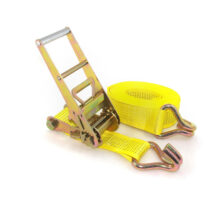
Ratchet Strap Standard 8-12m 2500daN (10pcs/carton)
Price range: €59.17 through €72.48 -
Sale!
ERGO Ratchet Strap 10-12m 2500daN (8pcs/carton)
Price range: €66.70 through €124.87 -
Sale!
Long end strap 9.5-11.5m LC2500daN (14-16 pcs/crt)
Price range: €67.57 through €67.59 -
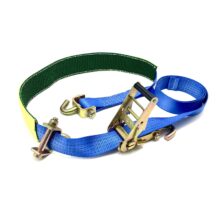
Car Transport Ratchet Strap 35 mm per pcs
€18.15 incl. VAT (€15.00 excl. VAT) -
Heavy Weight Ratchet Strap 75 mm 10m 5000daN (4pcs/carton)
€169.40 incl. VAT (€140.00 excl. VAT) -
Portable Strap winder
€18.14 incl. VAT (€14.99 excl. VAT) -
Sale!
ERGO Ratchet Strap with Extra Long Handle (6pcs/carton)10m
Original price was: €72.53.€65.27Current price is: €65.27. incl. VAT (€53.94 excl. VAT) -
Car Transport Ratchet Strap 35-50 mm packed in cartons
Price range: €145.20 through €181.50 -
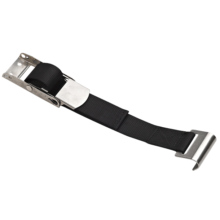
Curtain side trailer straps buckle plate
€1.03 incl. VAT (€0.85 excl. VAT) -
Curtain side trailer straps
€5.75 incl. VAT (€4.75 excl. VAT) -
Car Towing Strap with hooks 2500 daN 5 m
€18.15 incl. VAT (€15.00 excl. VAT)





What are ratchet straps and how are they rated?
Ratchet straps are the most convenient lashing equipment for tying down loads during transport, and they are made from durable polyester webbing and high-quality metal to EN 12195-2. In addition, they are available in 10 m and 12 m lengths, so a ratchet tie-down assembly has largely replaced traditional jute ropes, chains and wires. Each strap’s label states its Lashing Capacity (LC) in daN and its Standard Tension Force (STF) — that is, the pre-tension reached by applying the 50 daN Standard Hand Force (SHF) to the handle. LC is the maximum straight-pull force, whereas STF is the working pre-tension for tie-down lashing.
Ratchet strap sizes and lashing capacity
Because the correct strap depends on cargo weight and securing method, the table below shows typical values. However, always confirm the exact figures against each product label.
| Strap width | Typical LC | Typical STF | Typical application |
|---|---|---|---|
| 25 mm | 250–800 daN | 150–300 daN | Light loads, roof racks |
| 35 mm | 800–1500 daN | ~300 daN | Pallets, light freight |
| 50 mm | 2500–5000 daN | 350–500 daN | General freight, most trucks |
| 75 mm | 5000+ daN | 500–750 daN | Heavy machinery, direct lashing |
LC values are typical; therefore, always confirm them against each product label per EN 12195-2.
Ratchet straps — frequently asked questions
Show FAQ
What does LC mean on a ratchet strap? LC (Lashing Capacity) is the maximum straight-line force the strap may sustain, because it is marked in daN on the label to EN 12195-2. In short, it is a rated working capacity, not the breaking strength.
What is the difference between LC and STF? LC is the rated holding capacity in direct lashing, whereas STF is the hand-applied pre-tension in tie-down lashing. Moreover, both are printed on the label and used in EN 12195-1 calculations.
How many ratchet straps do I need? The number follows from cargo mass, friction coefficient and lashing angle, because these are calculated to EN 12195-1. For example, tie-down uses more low-STF straps, while direct lashing uses fewer high-LC straps.
PES or PP straps? Polyester (PES) has low stretch and high strength for most lashing. However, polypropylene (PP) is lighter and chemical-resistant but weaker, so check the material code on the label.