
Metal Seals
Showing all 7 resultsSorted by popularity
-

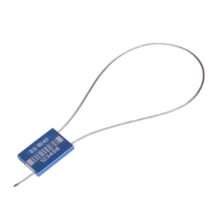
Cable seal ES 25/25
€1.69 incl. VAT (€1.40 excl. VAT) -
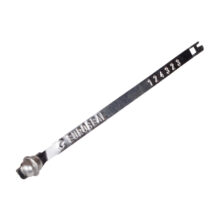
Metal Ball seal
€1.33 incl. VAT (€1.10 excl. VAT) -
Bolt seal high securing ES 99
€1.57 incl. VAT (€1.30 excl. VAT) -
Cable seal ES 18/40
€1.88 incl. VAT (€1.55 excl. VAT) -
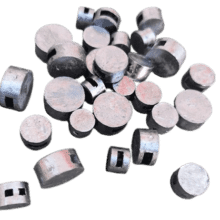
Lead seal Ø11 mm in carton 10 kg
€18.15 incl. VAT (€15.00 excl. VAT) -
Lead seal Ø10 mm in carton 10 kg
€156.09 incl. VAT (€129.00 excl. VAT) -
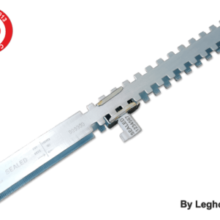
Barrier high security container seal
€7.26 incl. VAT (€6.00 excl. VAT)



What are metal seals and how secure are they?
Metal seals are high-security barrier devices that lock a closure and resist forced entry, unlike indicative plastic types that only show tampering. Because they are built from steel, the two main forms are the bolt seal — a thick steel pin that locks into a bush — and the cable seal, which uses a steel cable through a metal body. In addition, quality barrier devices are certified to ISO 17712:2013 “H” (High Security), which is required for many customs and C-TPAT shipments. Once fitted, a bolt or cable can only be removed with bolt cutters, so it delays intrusion rather than just revealing it. Every unit is barcoded and serial-numbered for traceability.
Metal seal types
Because security needs differ, the table below compares the main barrier options and their typical use.
| Type | Construction | Typical use |
|---|---|---|
| Bolt seal | Steel pin and locking bush | Container and trailer door latches, customs |
| Cable seal | Steel cable and metal body | Tankers, valves, railcars, irregular hasps |
| Metal strap / ball seal | Metal band, self-locking | Meters, drums, bags, lower-risk assets |
For high-security shipments, choose an ISO 17712 “H” certified bolt or cable type.
Metal seals — frequently asked questions
Show FAQ
What is the difference between a metal seal and a plastic seal? A metal barrier device resists forced entry and needs bolt cutters to remove, whereas a plastic pull-tight is indicative and only shows tampering. Therefore, metal types suit high-value cargo.
Bolt seal or cable seal? A bolt gives the highest barrier strength for container and trailer doors, whereas a cable suits tankers, valves and irregular hasps where a flexible steel cable is needed.
Are metal seals ISO 17712 certified? High-security bolt and cable types are certified to ISO 17712:2013 “H”, which many customs and C-TPAT programmes require. Always check the certificate for the specific product.