
Railways Seals
Showing all 12 resultsSorted by popularity
-

Locking Sealing Device – ZPU “Universal-1M”
Price range: €441.65 through €1 694.00 -
GUARD 1.5mm Security Cable Seal for Grain Wagons
Price range: €254.10 through €1 179.75 -
Lead seal Ø16 mm for Railway
€58.08 incl. VAT (€48.00 excl. VAT) -
Sealing wire 1.1 mm cut for Railway Leads seals 16mm
Price range: €21.18 through €50.82 -
Sealing wire 1.1 mm for Railway Leads seals 16mm
€18.15 incl. VAT (€15.00 excl. VAT) -
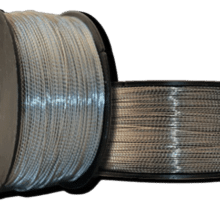
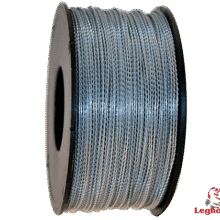
Galvanized Steel Sealing Wire 1 mm (Spiral)
€20.70 incl. VAT (€17.11 excl. VAT) -
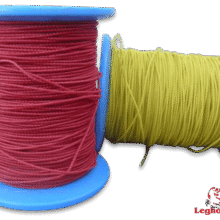
Plastic Coated Galvanized Sealing Wire 1 mm
€49.60 incl. VAT (€40.99 excl. VAT) -
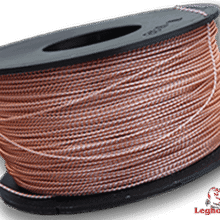
Nylon Copper Sealing Wire 1 mm
€27.29 incl. VAT (€22.55 excl. VAT) -
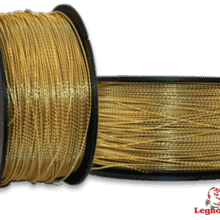
Brass Sealing Wire 1 mm (Red Brass)
€55.73 incl. VAT (€46.06 excl. VAT) -
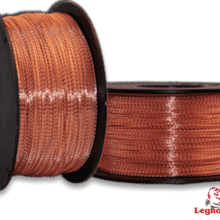
Copper Sealing Wire 1 mm (Red Copper)
€57.28 incl. VAT (€47.34 excl. VAT) -
Stainless Steel Sealing Wire 1 mm (AISI 304)
€34.15 incl. VAT (€28.22 excl. VAT) -
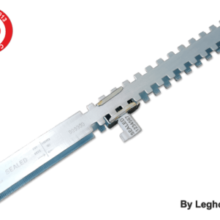
Barrier high security container seal
€7.26 incl. VAT (€6.00 excl. VAT)


What are railway seals and where are they used?
Railway seals are high-security barrier devices that lock the doors and hatches of rail wagons and rail cars, and they resist forced entry while giving clear evidence of tampering. Because different wagons need different locking points, the common forms are the railroad bolt — a long steel pin that fits varied latches — and the cable type, which threads a steel cable through a hopper or hatch mechanism. In addition, quality units are certified to ISO 17712:2013 “H” (High Security), so they suit high-value and cross-border rail freight. Once fitted, a bolt or cable can only be removed with cutters, and every unit is barcoded and serial-numbered for tracking.
Railway seal types by rail car
Because rail cars vary, the table below matches the main devices to the wagon they suit.
| Rail car | Recommended device | Why |
|---|---|---|
| Box car | Railroad bolt seal | Strong pin locks packaged-goods doors |
| Hopper car | Cable seal | Handles shifting bulk loads and hatches |
| Tank car | Bolt or cable seal | Secures multiple valve and access points |
| Automotive carrier | Barrier bolt seal | High breaking strength for high-value cargo |
For cross-border rail freight, choose an ISO 17712 “H” certified device.
Railway seals — frequently asked questions
Show FAQ
What seal is best for a rail wagon? A railroad bolt suits box-car doors, whereas a cable type suits hopper hatches and shifting loads. Therefore, the choice depends on the wagon and its locking point.
Are railway seals ISO 17712 certified? High-security bolt and cable types are certified to ISO 17712:2013 “H”, which suits high-value and cross-border rail freight. Always check the certificate for the specific product.
How are railway seals removed? A fitted bolt or cable can only be removed with bolt or cable cutters, so it delays intrusion. Because each unit is numbered, any interference is easy to trace.