
Реальная стоимость повреждённого груза
Стоимость повреждённого груза почти всегда превышает сумму, которую возвращает перевозчик, поскольку Конвенция CMR ограничивает ответственность перевозчика суммой 8,33 СДР за килограмм — примерно €10–11 за килограмм веса, а не фактической стоимостью товара. Таким образом, если стоимость груза превышает €11 за килограмм, владелец груза покрывает разницу. Кроме того, добавляются штраф за неправильное крепление, простой транспортного средства, повторная доставка и повышенный страховой взнос. В приведённом ниже примере один инцидент обходится в €24 800 — в десятки раз дороже, чем полный год использования крепёжного оборудования.
Сначала, Крепежные ремни и Цепи может показаться, что это статья расходов, которую легко сократить в бюджете. Однако вся арифметика полностью меняется в момент первого же происшествия. Давайте разберём стоимость повреждённого груза по частям, используя реальные лимиты и реальные цифры.
Из чего складывается стоимость повреждённого груза?
На первый взгляд владельцы грузов обычно считают только испорченные товары. На практике же счёт состоит как минимум из пяти пунктов — и самый крупный из них как раз то, что не покрывает ответственность перевозчика.
| Компонент | Что это | Кто платит на практике |
|---|---|---|
| Незащищённая стоимость груза | Разница между реальной стоимостью груза и лимитом ответственности по CMR (8,33 SDR/кг) | Владелец груза |
| Штраф за неправильное крепление | Штраф при дорожной проверке по Директиве 2014/47/EU | Водитель, перевозчик, грузчик — совместная ответственность |
| Время простоя транспортного средства | Грузовик ждёт разрешения и перегрузки вместо работы | Перевозчик |
| Переотправка и переупаковка | Новый запуск, паллеты, упаковка и склад | Отправитель или перевозчик |
| Премиум и потеря контракта | Страховщик пересчитывает цену после убытка | Перевозчик |
Ловушка CMR: перевозчики платят по весу, не по стоимости
Статья 23 Конвенции CMR ограничивает возмещение 8.33 SDR за килограмм Отсутствие или повреждение общего веса. СДР — расчетная единица МВФ с плавающим курсом. €10–11 за килограммЛогика важна: перевозчик отвечает за вес груза, а не за его коммерческую стоимость при транспортировке.
Поэтому разрыв становится огромным для легких, дорогостоящих грузов — электроники, инструментов, запасных частей, приборов. Килограмм ноутбуков может стоить €200, но компенсация остаётся той же €10–11. Вы можете преодолеть этот потолок только двумя способами: объявить стоимость товара в накладной согласно статье 24 (за дополнительную плату), или доказать умышленное неправомерное поведение или грубую небрежность перевозчика согласно статье 29.
Пример расчета стоимости поврежденного груза при 4000 кг
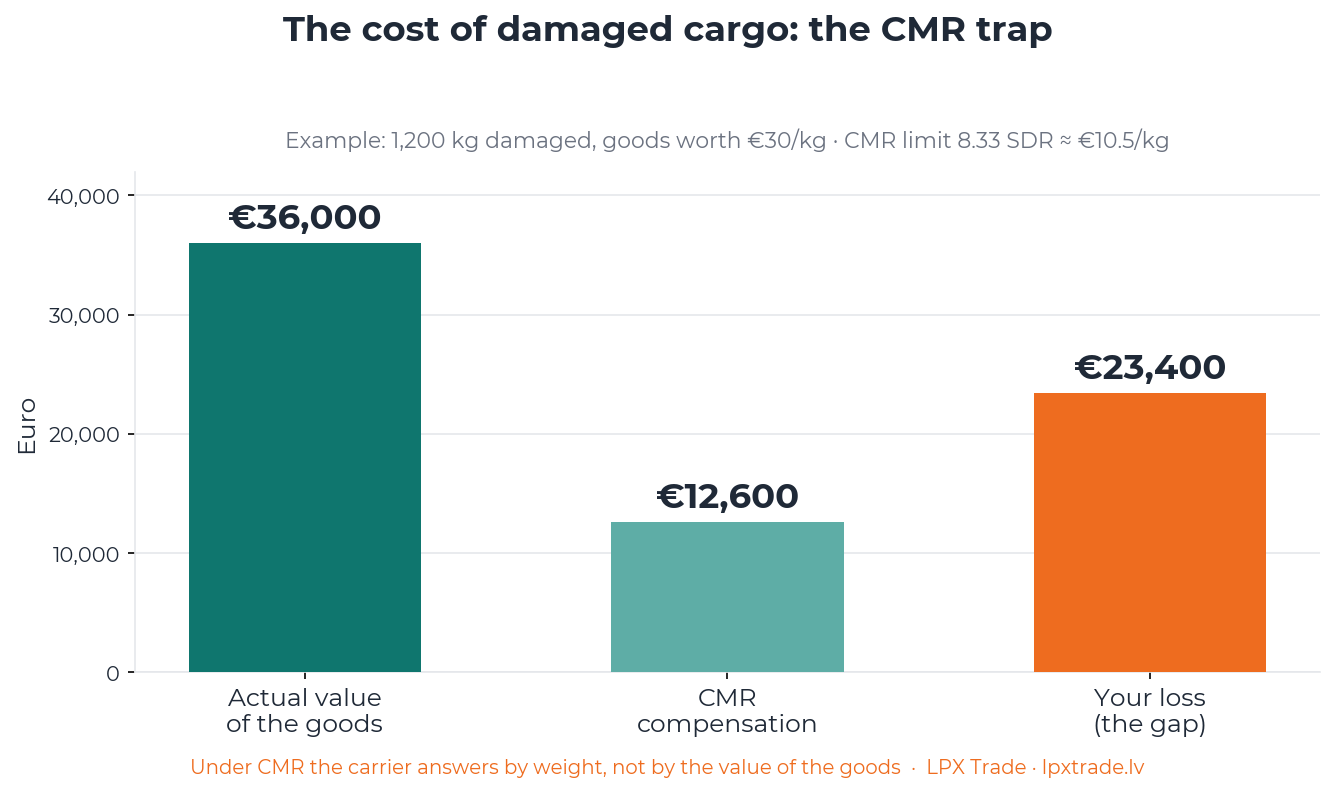
Рассмотрим типичный рейс сборного груза. Условия: груз массой 4000 кг стоимостью €120 000 (то есть €30 за килограмм), и 30% его — 1200 кг — смещается и повреждается при транспортировке. При этом для лимита ответственности по CMR используется тариф €10,5 за килограмм.
| Линия | Расчет | Количество |
|---|---|---|
| Реальная стоимость поврежденного груза | 1 200 кг × €30 | €36,000 |
| Компенсация по CMR | 1 200 кг × €10,5 | −€12 600 |
| Незащищенный груз | различия | €23,400 |
| Время простоя транспортного средства | 2 дня × €400 | €800 |
| Переупаковка и повторная доставка | - | €600 |
| Прямые убытки от происшествия | - | €24,800 |
А это ещё без учёта штрафа. При проверке на дороге в ЕС Ненадлежащее крепление несет собственный штраф, а суммы достигают €5 000. Таким образом, с учетом штрафа счет приближается к €30 000. Медленные потери здесь также не отражены — переоценка полиса и риск потери контракта после урегулирования претензии.
Почему это касается всех в цепочке Директива 2014/47/ЕС возлагает ответственность за крепление грузов на несколько сторон: инспектор может наложить штраф на водителя, перевозчика и грузоотправителя, который погрузил транспортное средство. Поэтому вы не можете просто переложить всю ответственность на водителя.
Год крепежа против одного случая
Полный набор крепежных ремней и принадлежностей для оснащения полуприцепа на год. Рекомендуемый комплект для стандартного тентованного прицепа.
| Товар | Количество | Ориентировочная стоимость |
|---|---|---|
| Крепежные ремни 2500 дaN, 5 м | 20 шт | €240 |
| Крепежные цепи с крюками (8 мм) | 4 шт | €220 |
| Талрепы для крепления грузов | 2 шт | €70 |
| Противоскользящие коврики | Набор | €120 |
| Защитные уголки | 20 шт | €60 |
| Годовой набор для крепления | - | ≈ €710 |
Сравнение говорит само за себя: €24 800 против €710 — один инцидент стоит примерно 35 раз Годовой запас крепежного оборудования. Даже если вы удвоите комплект и сократите число происшествий вдвое, соотношение всё равно свидетельствует против экономии на безопасности. Между тем Европейская комиссия оценивает, что до 25% аварий грузовиков связаны с неадекватным креплением грузов, а около 40% проверенных автомобилей эксплуатируются с ненадлежащим креплением или без него.
Правильно подберите комплект с нашей Расчет LC за 2 минутыРеальный пример того, как правильное крепёжное оборудование предотвратило именно такую потерю груза, смотрите здесь как правильное крепление груза сэкономило логистической компании тысячи евро.
The figures above form an illustrative calculation with stated assumptions, not a statistic. So plug in your own weight, cargo value and rates — the logic stays the same.
Equip the trailer for the price of avoiding one claim. Крепежное оборудование EN 12195 с маркировкой LC, протестировано TÜV SÜD. Декларация соответствия доступна по запросу.
FAQ: стоимость поврежденного груза и компенсация
Стоимость одного поврежденного груза
Стоимость повреждённого груза включает недоскомпенсированную стоимость товаров, штраф, простой, повторную доставку и увеличенную премию страхования. Например, при грузе весом 4000 кг стоимостью €120 000 и 30% повреждении прямые потери составляют около €24 800 — из которых €23 400 это просто разница между реальной ценой и лимитом ответственности по CMR.
Сколько платит перевозчик по CMR за поврежденный груз?
В соответствии со статьей 23 Конвенции о договоре международной дорожной перевозки грузов (КМВ) компенсация ограничена суммой 8,33 СДР за килограмм повреждённого или утерянного груза — примерно €10–11 за кг по текущему курсу. Поскольку перевозчик отвечает по массе, а не по коммерческой стоимости, выплата покрывает лишь часть убытков при перевозке дорогостоящих товаров.
Что означает 8,33 SDR на килограмм?
СДР (Специальные права заимствования) — это расчётная единица Международного валютного фонда с плавающим курсом. Статья 23 Конвенции ЦМР устанавливает лимит в размере 8,33 СДР за килограмм, что соответствует примерно €10–11 за кг. Иными словами, эта сумма является максимальной ответственностью перевозчика за повреждённый или утерянный груз.
Покрывает ли страховка CMR полную стоимость груза?
CMR страховка защищает ответственность перевозчика до 8,33 СДР за килограмм, а не коммерческую стоимость груза. Поэтому, если стоимость вашего груза превышает €10–11 за килограмм, владелец несет убыток на разницу. Для полной защиты вам необходима отдельная страховка от всех рисков или объявленная стоимость в накладной согласно статье 24.
Кто отвечает за ненадлежащее крепление грузов?
Ответственность несут все участники. В соответствии с Директивой 2014/47/EU инспектор дорожного движения может наложить санкции на водителя, перевозчика и грузоотправителя, загрузившего транспортное средство. Поэтому правильное крепление грузов — это ответственность не только водителя, но и склада, который подготовил груз к отправке.
Год крепежа vs одна авария
Во-первых, ориентировочный набор крепления для одного полуприцепа — крепежные ремни, крепежные цепи, крепежные устройства, противоскользящие коврики и защитные уголки — стоит примерно €710 в год. Указанный выше случай обходится примерно в €24 800, что примерно в 35 раз дороже годового набора.
Автор: LPX Trade — поставщик оборудования для крепления грузов EN 12195. Руководство основано на законодательстве ЕС и практике дорожных проверок.
Последнее обновление: 2 августа 2026 года.
Источники: Конвенция CMR, статьи 23, 24 и 29 (лимит 8,33 СДР/кг) Директива 2014/47/ЕС Техническое обслуживание и крепление грузов Крепление грузов в дорожном транспорте — руководство (Европейская комиссия); EN 12195-1:2010
Информация в статье не является юридической консультацией. Компенсация зависит от договора перевозки и полиса.