
Was ist Achslast und welche EU-Grenzen gelten?
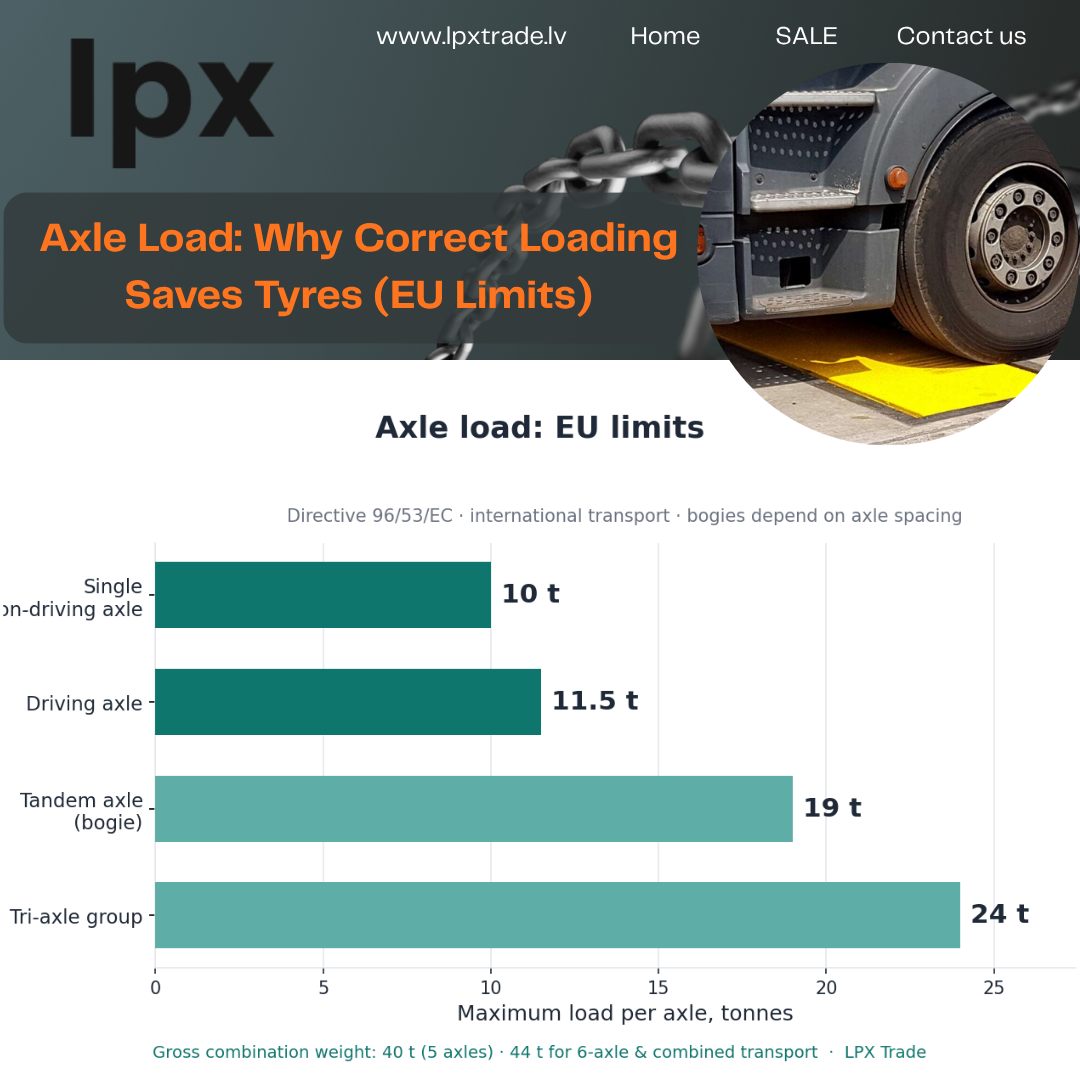
Die Achslast ist das Gewicht, das die Räder einer Achse auf die Straße übertragen. Gemäß der EU-Richtlinie 96/53/EC ist sie begrenzt auf 10 t für eine einzelne Antriebsachse, 11,5 t für eine angetriebene Achse, bis zu 19 t für ein Tandemdrehgestell und bis zu 24 t für eine Drillingachsengruppe. Eine korrekt verteilte Achslast spart Reifen direkt, denn keine Achse läuft über ihre Nennkapazität hinaus, sodass die Reifen weder überhitzen noch ungleichmäßig verschleißen. Überladung trifft Sie jedoch doppelt: erstens durch schnelleren Reifenverschleiß und dann durch Bußgelder — in Lettland werden diese für jede überladene Achse separat verhängt. Nachfolgend finden Sie alle Grenzen, Tabellen und praktische Tipps in wenigen Minuten.
Ein Fahrzeug mit einem Gesamtgewicht von bis zu 40 t kann eine überladene Achse transportieren, während eine andere unterbelastet bleibt. Daher ist nicht nur das Gesamtgewicht entscheidend, sondern die Gewichtsverteilung auf die Achsen — dies bestimmt sowohl die Legalität der Fahrt als auch die Verschleißgeschwindigkeit der Reifen. Informationen zu Ladesicherungsmethoden finden Sie in unserem Leitfaden Ladungsgewichtsverteilung.
Achslastengrenzwerte in der EU und Lettland
Die Richtlinie 96/53/EG legt die Grundgrenzen für den internationalen Transport fest, und Lettland wendet dieselben Werte an. Auf einigen Straßen kann jedoch das Zeichen 313 («Achslastbeschränkung») eine niedrigere Grenze setzen. Hier sind die wichtigsten Zahlen:
| Achse / Achsengruppe | Maximale Achslast | Hinweis |
|---|---|---|
| Einzelne Lenkachse | 10 t | Gewichtsbeschränkung auf Straßen |
| Antriebsachse | 11,5 t | Zwillingsreifen und straßenfreundliche Luftfederung |
| Tandemachse (Laufwerk) | bis 18–19 t | Hängt von Achsabstand und Federungstyp ab |
| Dreiachsen-Gruppe | bis 24 t | Abhängig vom Achsabstand |
| Gesamtkombiniertes Gewicht | 40 t | Standard für 5-achsigen Zugmaschine mit Auflieger |
| Bruttogewicht (ges. / 6 Achsen) | 44 t | Kombinierter Transport und 6-achsige Sattelzugmaschinen |
Darüber hinaus erhalten Fahrzeuge mit alternativen Kraftstoffen oder Nullemissionen bis zu +2 t Gesamtgewicht (Richtlinie 2015/719 und Verordnung 2019/1242), was das Gewicht von Batterien oder Gastanks ausgleicht.
Bußgelder für Achsüberlastung in Lettland
In Lettland regelt das Straßenverkehrsgesetz (Autopārvadājumi likums) die Überladung, und die Strafe wird für jede überladene Achse separat angewendet. Die praktische Schlussfolgerung ist einfach: Wenn ein Fahrzeug die Grenze auf drei Achsen überschreitet, bedeutet dies drei separate Bußgelder statt eines. Daher ist die «Einhaltung des zulässigen Gesamtgewichts» nicht ausreichend — entscheidend ist, wie die Ladung auf die Achsen verteilt ist, und eine überladene Achse kann erheblich zur Bußgeldrechnung beitragen, die wir analysieren Kosten für beschädigte Ladung.
Warum spart die richtige Achslast Reifen?
Jeder Reifen ist für eine bestimmte Last ausgelegt (der Lastindex auf der Seitenwand). Wenn die Achslast diese Grenze überschreitet, wächst die Kontaktfläche, der Reifen verformt sich stärker und heizt auf – die interne Temperatur steigt um 10–15 °C an, und diese Wärme beschleunigt die Gummialterung und erhöht das Platzerrisiko. Wenn die Last zudem ungleichmäßig verteilt ist, nutzt sich die überbelastete Achse deutlich schneller ab als die übrigen, sodass Sie die Reifen einzeln austauschen müssen, anstatt sie als Satz zu wechseln.
| Folgen einer Achsüberlastung | Folgen |
|---|---|
| Reifentemperaturanstieg (+10–15 °C) | Beschleunigte Gummialterung, Reifenschaden-Risiko |
| Ungleichmäßige Achslastverteilung | Ungleichmäßiger Verschleiß, Reifen einzeln wechseln |
| Erhöhter Rollwiderstand | Mehr Kraftstoff verbrannt |
| Mehrere Achsen über Limit | Geldstrafe pro Achse |
| Zusatzdruck auf der Straße | Verschleiß der Fahrbahn wächst nichtlinear |
Wie verteilt man die Last auf Achsen?
Die Regel ist einfach: Halten Sie jede Achse innerhalb ihrer Grenze, nicht nur das Gesamtgewicht. Platzieren Sie schwere Gegenstände über den Achsen und zur Mitte der Ladefläche statt zum Überstand, da das Verschieben der Ladung nach vorne die Lenkachse überlastet und das Verschieben nach hinten die hintere Achsgruppe überlastet und das Handling verschlechtert. Für die vollständige Methode – Platzierungszonen, Hebelwirkung, mehrstufige Verschiebungen und Vorfahrtsprüfungen – siehe unseren speziellen Leitfaden für LadungsgewichtsverteilungLadung korrekt sichern Sicherungsmethode Verhindert Ladungsversatz und Achsenunauswucht während des Transports
Ladung bleibt sicher fixiert Blockiermatten und Zurrgurte nach EN 12195 halten Ihre Ladung sicher. LC-gekennzeichnet, Konformitätserklärung auf Anfrage.
FAQ: Achslast und Überladung
Maximal zulässige Achslast in der EU?
Gemäß der Richtlinie 96/53/EG beträgt die maximale Achslast 10 t für eine einzelne nicht angetriebene Achse und 11,5 t für eine angetriebene Achse. Für eine Tandemachse (Laufwerk) erreicht sie 18–19 t und für eine Dreiachsengruppe bis zu 24 t, je nach Achsabstand und Aufhängungstyp. Lettland wendet die gleichen Grenzwerte an.
Wie viele Tonnen auf der Fahrtachse?
Die maximale Achslast für Antriebsachsen in der EU beträgt 11,5 t, sofern die Achse mit Doppelbereifung und luftgefedertem (straßenschonenden) Fahrwerk ausgestattet ist. Eine einzelne Lenkachse ist auf 10 t begrenzt. Die Richtlinie 96/53/EG legt diese Grenzen fest, die im internationalen Transport, einschließlich Lettlands, gelten.
Welche Strafen für Achsüberlastung in Lettland?
In Lettland regelt das Straßenverkehrsgesetz die Überladung, und die Geldbuße wird für jede überladene Achse separat verhängt. Das Überschreiten des Limits bei drei Achsen bedeutet daher drei Bußgelder, nicht eines. Die Einhaltung nur des Gesamtgewichts ist nicht ausreichend, da die Inspektoren die Belastung jeder Achse überprüfen.
Wie beeinflusst Überladung die Reifen?
Überladung treibt einen Reifen über seine Nenntraglast hinaus: Die Kontaktfläche vergrößert sich, der Reifen überhitzt (Innentemperatur +10–15 °C), das Gummi altert schneller und das Platzungsrisiko steigt. Wenn die Last ungleichmäßig verteilt ist, verschleißt die überlastete Achse schneller als die übrigen, und der Kraftstoffverbrauch steigt wegen des erhöhten Rollwiderstands.
Wie verteilen Sie Ladung richtig auf Achsen?
Platzieren Sie schwere Gegenstände näher zur Mittellinie und über den Achsen und vermeiden Sie Überhangs. Das Verschieben der Ladung nach vorne überbelastet die Vorderachse, während das Verschieben nach hinten die Hinterachsen überbelastet und das Handling beeinträchtigt. Das Ziel ist eine Achslastverteilung, die ausgeglichen bleibt, ohne einzelne Grenzwerte zu überschreiten. Überprüfen Sie die Verteilung wenn möglich zunächst auf einer Wiegebrücke.
Unterschied zwischen Achslast und Gesamtgewicht?
Gesamtgewicht ist das Gesamtgewicht des Fahrzeugs mit seiner Ladung, während die Achslast das Gewicht ist, das eine Achse trägt. Sie können unter 40 t Gesamtgewicht bleiben und trotzdem eine einzelne Achse durch schlechte Gewichtsverteilung überlasten. Inspektoren prüfen beide Werte und verhängen Bußgelder für überladene Achsen.
Autor: LPX Trade — Anbieter von Ladungssicherungsausrüstung EN 12195. Der Leitfaden basiert auf EU-Gesetzgebung und Straßenverkehrskontrollpraxis.
Letzte Aktualisierung: 2. August 2026.
Quellen: Richtlinie 96/53/EG (Gewicht- und Achslastbegrenzungen); Richtlinie 2015/719 und Verordnung 2019/1242 (Regelungen für alternative Kraftstoffe und emissionsfreie Fahrzeuge); EUR-Lex: Gewicht und AbmessungenStraßenverkehrsgesetz (Lettland) — Achsüberlast-Bußgelder