
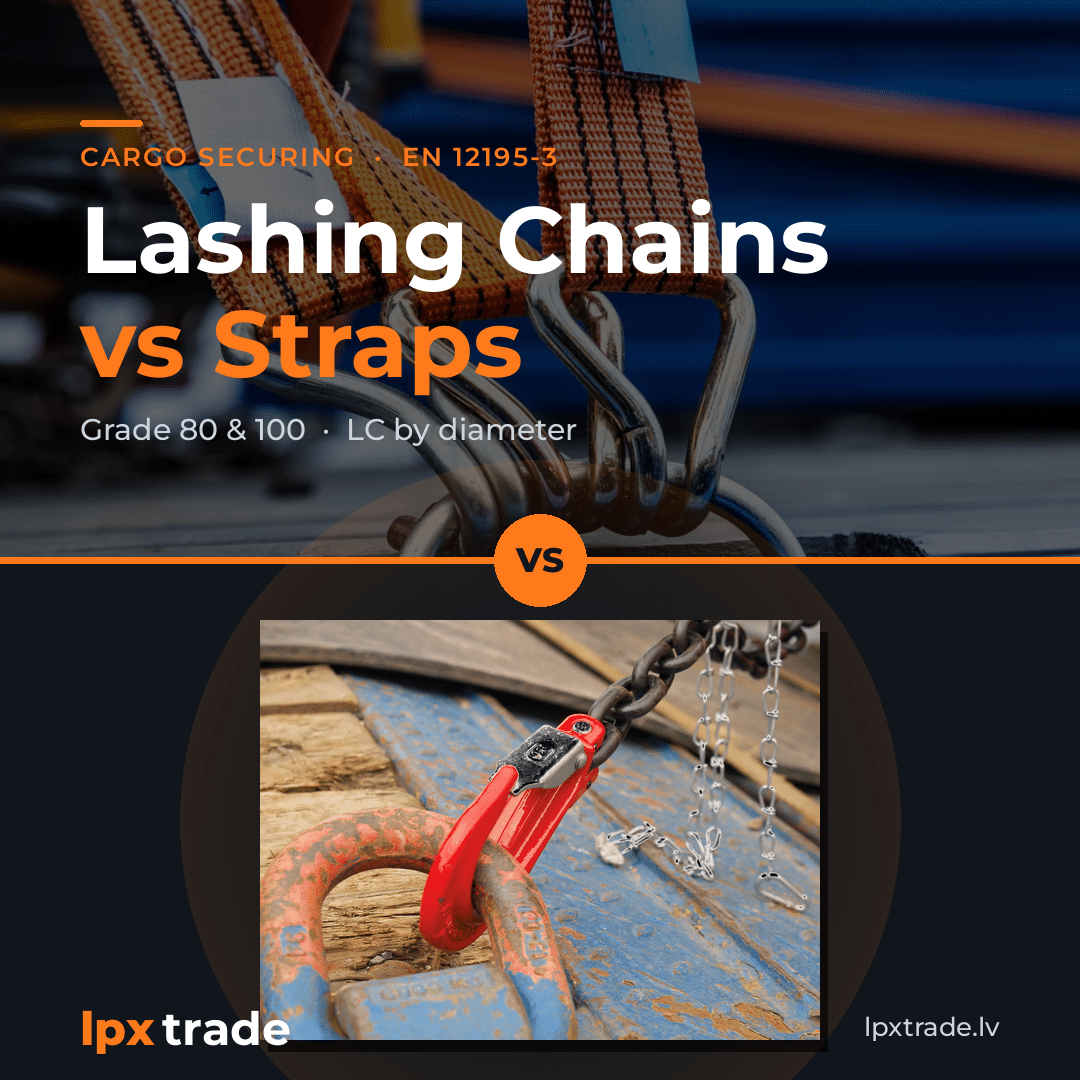
Цепи для крепления или крепежные ремни — что вам следует использовать?
Крепежные цепи подходят для тяжелых, жестких грузов с острыми краями — машин, стали, труб — поскольку они сочетают в себе высокую рабочую нагрузку с почти нулевым растяжением. Каждая цепь имеет маркировку EN 12195-3, показывающую ее грузоподъемность (LC) в даН, и в основном работает в прямом (диагональном) креплении. В отличие от этого, крепежные ремни (EN 12195-2) подходят для поддонов, коробок и легких до средних грузов, закрепленных с помощью стяжки. В результате одна цепь удерживает гораздо больше, чем ремень, поэтому вам, как правило, нужно меньше цепей.
Ниже мы объясняем, чем цепи отличаются от ремней, LC по классу 80 и классу 100, когда использовать каждую из них, как рассчитать количество цепей и какой натяжитель вам нужен. Для стороны ремня сравнения, тем временем, смотрите наш Как выбрать крепежный ремень по LC: руководство.
Что такое крепежные цепи и чем они отличаются от ремней?
Стропа для крепления груза — это короткая цепь из легированной стали с крючками и натяжителем, предназначенная только для удержания груза во время транспортировки — никогда не для подъема. На практике серия EN 12195 устанавливает требования к прочности, маркировке и испытаниям для Крепежные узлы и их маркировка, а для цепей это означает EN 12195-3. Прежде всего, цепь отличается от ремня двумя способами: значительно более высоким предельным усилием и почти отсутствием растяжения.
| Критерий | Цепи (EN 12195-3) | Ремни (EN 12195-2) |
|---|---|---|
| Материал | Легированная сталь, короткая ссылка | Полиэстеровая лента |
| Типичная LC | 4000–16000+ даН | 250–5,000 даН |
| Растяжение под нагрузкой | очень низкий | до 7% |
| Основной метод | прямое (диагональное) крепление | привязка и прямая |
| Лучше всего для | машины, сталь, трубы, острые края | поддоны, коробки, легкие и средние грузы |
| Сопротивление кромке / истиранию | высокий | нужны защитные уголки |
| Подъем | не разрешено | не разрешено |
Класс 80 против класса 100: какова предельная нагрузка по диаметру цепи?
Рабочая нагрузка цепи зависит от марки стали и диаметра звена. Например, марка 100 обеспечивает примерно на 25% большую предельную нагрузку (LC), чем марка 80 при том же диаметре, что означает более легкое и удобное в обращении оборудование. Кроме того, минимальная разрывная нагрузка (MBL) всегда в два раза больше предельной нагрузки (LC).
| Диаметр | LC класс 80 (даН) | LC класс 100 (даН) | ≈ сила сжатия |
|---|---|---|---|
| 8 мм | 4,000 | 5,000 | ≈ 4–5 т |
| 10 мм | 6,300 | 8,000 | ≈ 6–8 т |
| 13 мм | 10,000 | 13,400 | ≈ 10–13 т |
| 16 мм | 16,000 | ≈ 20,000 | ≈ 16–20 т |
Бирка цепи показывает LC в даН (1 даН ≈ 1 кг силы удержания). Примечательно, что EN 12195-3 делает эту маркировку обязательной, поэтому никогда не используйте цепь без читаемой бирки.
Когда следует выбирать цепи вместо ремней?
| Груз | Рекомендация |
|---|---|
| Машины, экскаваторы, техника на низкорамных платформах | Цепи — прямое крепление |
| Стальные секции, трубы, профили | Цепи — устойчивость к острым краям |
| Тяжелые упаковки, древесина | Цепи или 50 мм ремни |
| Паллеты, коробки, мешки | Ремни — крепление |
| Хрупкий или легкий груз | Ремни — мягче, не повредят |
Что касается самих методов — крепление, диагональ, петля и блокировка — наши визуальное руководство по 5 методам крепления грузов покрывает каждый из них.
Как рассчитать LC цепи и количество цепей? (EN 12195-1)
Вы рассчитываете количество цепей для EN 12195-1:2010 — от массы груза, метода крепления, углов и прочности цепи. Обычно цепи работают в прямом (диагональном) креплении, где горизонтальный компонент удержания имеет наибольшее значение:
Таким образом, чем ближе цепь расположена к горизонтали (меньший угол α), тем больше горизонтальное сопротивление при прямой обвязке. Для полного расчета с углами и трением смотрите наш Руководство по расчету LC и углам стяжки. Наконец, для анкерных точек и натяжителей прочитайте нашу статью о Болты с ушком и талрепы.
Загрузочный биндер или натяжитель: какой натяжитель для крепежной цепи?
Зажим натягивает цепь. Более того, в соответствии с EN 12195-3 устройство должно предотвращать непреднамеренное ослабление во время транспортировки.
| Тип | Заметки |
|---|---|
| Храповый стяжной механизм | Точная, контролируемая предварительная натяжка; идеально подходит для тяжелых цепей |
| Гайка с внутренней резьбой | Плавная регулировка длины; часто для фиксированного натяжения |
| Рычажный стяжной инструмент | Быстро, но требует правильной техники |
Подбирайте стяжной механизм под класс и диаметр цепи — например, G80 10–16 мм.
Подбирайте цепь и стяжной механизм под ваш груз. Каталог LPX Trade предлагает цепи для стяжки класса 80 по стандарту EN 12195-3, храповики и крюки. Декларация о соответствии доступна по запросу.
Часто задаваемые вопросы о стяжным цепям
В чем разница между крепежной цепью и грузоподъемной цепью?
Крепежная цепь (EN 12195-3) удерживает груз только при перевозке и имеет маркировку LC в daN. Грузоподъемная же цепь (EN 818) предназначена для подъема и имеет маркировку WLL. Поэтому никогда не путайте их: поднимать груз крепежной цепью нельзя.
Какова предельная нагрузка 13 мм цепи?
Цепь 13 мм класса 80 имеет предельную нагрузку (LC) 10 000 даН (≈ 10 т), в то время как цепь класса 100 того же размера достигает 13 400 даН. В обоих случаях разрывная нагрузка вдвое превышает LC. Для точной цифры проверьте ярлык цепи, который показывает это согласно EN 12195-3.
Должен ли я использовать цепи или ремни?
Выбирайте цепи для тяжелых, жестких грузов с острыми краями — машин, стали, труб — потому что они предлагают значительно более высокий предельный нагрузочный коэффициент (LC), поэтому вам нужно меньше креплений. Ремни, с другой стороны, подходят для поддонов, коробок и легких до средних грузов, закрепленных с помощью стяжек.
В чем разница между классом 80 и классом 100?
Обе марки являются легированными сталями по стандарту EN 12195-3. Марка 100, однако, обеспечивает примерно на 25% большую грузоподъемность при одинаковом диаметре, поэтому цепь легче и удобнее в обращении. Марка 80, в свою очередь, дешевле и более распространена. Вкратце, обе марки безопасны в пределах своей номинальной грузоподъемности.
Нужен ли для цепи отдельный стяжной механизм?
Да. Вы натягиваете цепь с помощью храповика или натяжного устройства, и в соответствии с EN 12195-3 устройство должно предотвращать непреднамеренное ослабление. Затем подберите устройство к классу и диаметру цепи — например, G80 10–16 мм.
Сколько цепей для крепления мне нужно?
Рассчитайте число по EN 12195-1 из массы груза, метода крепления, углов и LC цепи. При прямом креплении, например, полезная горизонтальная сила зависит от угла: LC_horizontal ≈ LC × cos α. Короче говоря, метод зеркалит ремни, но с LC цепи.
Автор: Редакционная команда LPX Trade.
Последнее обновление: 2 августа 2026 года.
Источники: EN 12195-1:2010 (расчет сил крепления); EN 12195-3:2001 (крепежные цепи, маркировка LC); EN 818 (подъемные цепи, WLL — для четкого разделения); lashing assembly marking.