
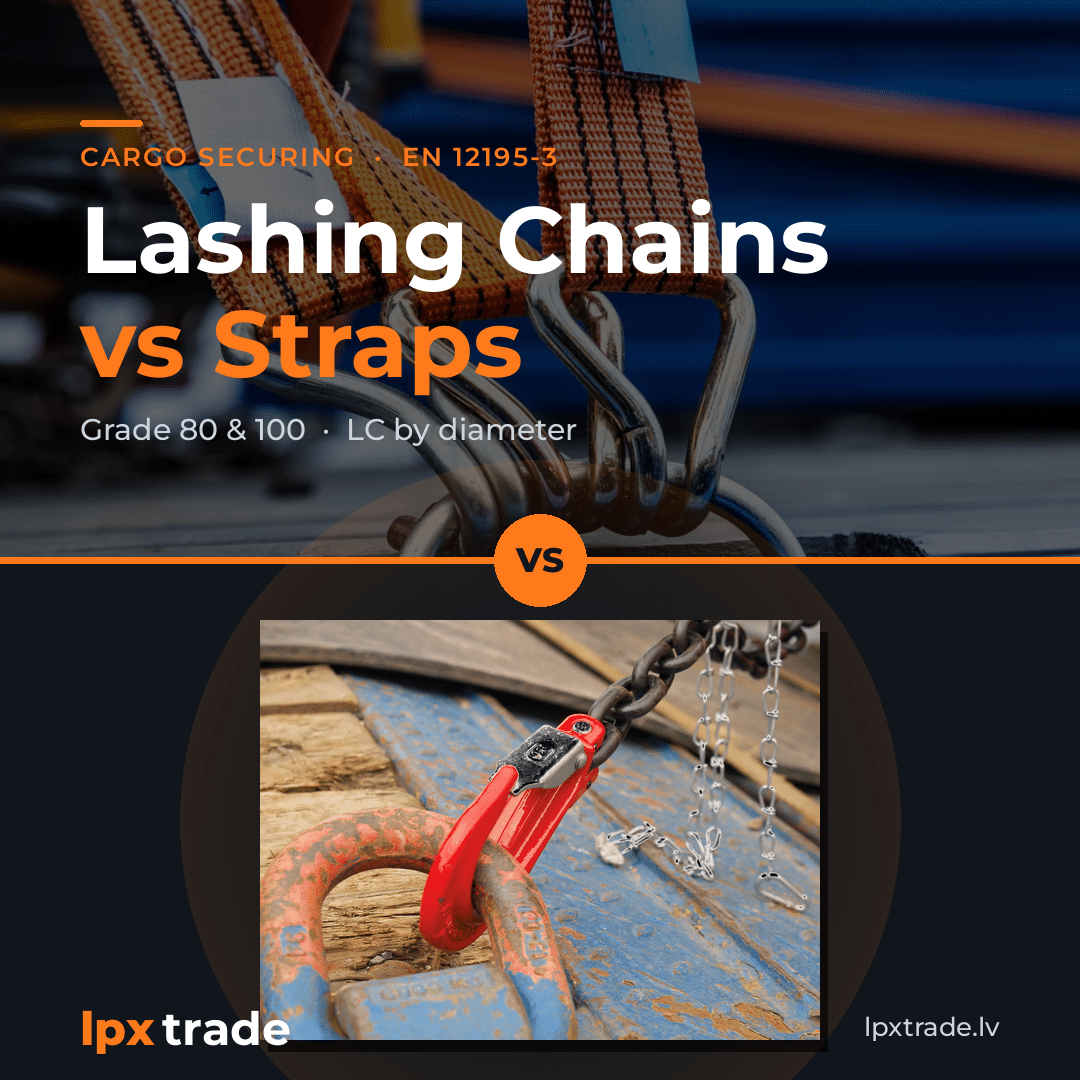
Zurrketten oder Zurrgurt — was sollten Sie verwenden?
Zurrketten eignen sich für schwere, starre Lasten mit scharfen Kanten — Maschinen, Stahl, Rohre — da sie eine hohe Arbeitslast mit nahezu null Dehnung kombinieren. Jede Kette trägt ein EN 12195-3 Zeichen, das ihre Sicherungskapazität (LC) in daN anzeigt, und sie funktioniert hauptsächlich in direkter (diagonaler) Sicherung. Im Gegensatz dazu eignen sich Zurrgurt (EN 12195-2) für Paletten, Kisten und leichte bis mittlere Ladungen, die mit Zurrgurten gesichert sind. Infolgedessen hält eine Kette viel mehr als ein Riemen, sodass Sie in der Regel weniger davon benötigen.
Unten erklären wir, wie sich Ketten von Riemen unterscheiden, die LC nach Grad 80 und Grad 100, wann man jede verwenden sollte, wie man die Anzahl der Ketten berechnet und welchen Spannvorrichtung Sie benötigen. Für die Riemenseite des Vergleichs sehen Sie bitte unser Zurrgurt nach LC auswählen: der Leitfaden.
Was sind Zurrketten und wie unterscheiden sie sich von Riemen?
Eine Zurrkette ist eine Kurzgliederlegierungsstahlkette mit Haken und einem Spanner, die nur für die Ladungssicherung während des Transports — niemals zum Heben — ausgelegt ist. In der Praxis legt die EN 12195-Familie die Anforderungen an Festigkeit, Kennzeichnung und Prüfung fest für Zurrgurte und deren Kennzeichnung, und für Ketten bedeutet dies EN 12195-3. Vor allem unterscheidet sich eine Kette in zwei Punkten von einem Gurt: viel höherer LC und fast keine Dehnung.
| Kriterium | Ketten (EN 12195-3) | Gurte (EN 12195-2) |
|---|---|---|
| Material | Legierter Stahl, kurze Verbindung | Polyesterband |
| Typische LC | 4000–16000+ daN | 250–5.000 daN |
| Dehnung unter Last | sehr niedrig | bis zu 7% |
| Hauptmethode | direktes (diagonales) Verzurren | Befestigung und direkt |
| Am besten geeignet für | Maschinen, Stahl, Rohre, scharfe Kanten | Paletten, Kisten, leichte bis mittlere Ladung |
| Kanten- / Abriebfestigkeit | hoch | benötigt Kantenschutz |
| Heben | nicht erlaubt | nicht erlaubt |
Klasse 80 vs. Klasse 100: Wie hoch ist die LC nach Kettendurchmesser?
Die Arbeitslast einer Kette hängt von der Stahlgüte und dem Durchmesser des Gliedes ab. Zum Beispiel liefert die Güte 100 etwa 25% mehr LC als die Güte 80 bei gleichem Durchmesser, was leichtere und handlicher zu bedienende Ausrüstung bedeutet. Darüber hinaus ist die Mindestbruchlast (MBL) immer doppelt so hoch wie die LC.
| Durchmesser | LC Klasse 80 (daN) | LC Klasse 100 (daN) | ≈ Haltekraft |
|---|---|---|---|
| 8 mm | 4,000 | 5,000 | ≈ 4–5 t |
| 10 mm | 6,300 | 8,000 | ≈ 6–8 t |
| 13 mm | 10,000 | 13,400 | ≈ 10–13 t |
| 16 mm | 16,000 | ≈ 20.000 | ≈ 16–20 t |
Das Kettenetikett zeigt die LC in daN (1 daN ≈ 1 kg Haltekraft). Bemerkenswert ist, dass EN 12195-3 diese Kennzeichnung verpflichtend macht, daher sollten Sie niemals eine Kette ohne lesbares Etikett verwenden.
Wann sollten Sie Ketten anstelle von Riemen wählen?
| Fracht | Empfehlung |
|---|---|
| Maschinen, Bagger, Anlagen auf Tiefladern | Ketten — direkte Sicherung |
| Stahlabschnitte, Rohre, Profile | Ketten — Widerstand gegen scharfe Kanten |
| Schwere Pakete, Holz | Ketten oder 50 mm Riemen |
| Paletten, Kisten, Säcke | Riemen — Verzurren |
| Zerbrechliche oder leichte Fracht | Riemen — weicher, beschädigen nicht |
Was die Methoden selbst betrifft — Abspannung, Diagonal, Schlaufe und Blockierung — unsere visuelle Anleitung zu den 5 Methoden der Ladungssicherung deckt jeden einzelnen ab.
Wie berechnet man die Ketten-LC und die Anzahl der Ketten? (EN 12195-1)
Sie berechnen die Anzahl der Ketten, um EN 12195-1:2010 — von der Frachtmasse, der Verzurrmethode, den Winkeln und der Ketten-LC. Typischerweise arbeiten Ketten in direkter (diagonaler) Verzurrung, wobei die horizontale Haltekomponente am wichtigsten ist:
Daher gilt: Je näher die Kette horizontal verläuft (ein kleinerer Winkel α), desto größer ist der horizontale Halt bei direkter Verzurrung. Für die vollständige Berechnung mit Winkeln und Reibung siehe unser LC-Berechnung und Anleitung zu den Zurrwinkeln. Schließlich lesen Sie unseren Artikel über Ankerpunkte und Spannschlösser Augenschrauben und Spannschlösser.
Ladungsbinder oder Spannschraube: welcher Spannvorrichtung für eine Zurrkette?
Ein Binder spannt die Kette. Darüber hinaus muss das Gerät gemäß EN 12195-3 ein unbeabsichtigtes Lockern während des Transports verhindern.
| Typ | Notizen |
|---|---|
| Ratschen-Lastspanner | Präzise, kontrollierte Vorspannung; ideal für schwere Ketten |
| Spannschloss | Sanfte Längenanpassung; oft für feste Spannung |
| Hebelbinder | Schnell, erfordert jedoch die richtige Technik |
Wählen Sie den Lastspanner passend zu Güteklasse und Durchmesser der Kette — zum Beispiel G80 10–16 mm.
Wählen Sie Kette und Lastspanner passend zu Ihrer Ladung. Der Katalog von LPX Trade führt Zurrketten der Klasse 80 gemäß EN 12195-3, Ratschenlastbinder und Haken. Konformitätserklärung auf Anfrage erhältlich.
Häufig gestellte Fragen zu Zurrketten
Was ist der Unterschied zwischen einer Zurrkette und einer Hebekette?
Eine Zurrkette (EN 12195-3) sichert die Ladung nur während des Transports und trägt eine LC-Kennzeichnung in daN. Eine Hebekette (EN 818) hingegen dient zum Heben und trägt eine WLL-Kennzeichnung. Verwechseln Sie die beiden daher niemals — mit einer Zurrkette darf keine Last gehoben werden.
Was ist die LC einer 13 mm Kette?
Eine 13 mm Kette der Klasse 80 hat eine LC von 10.000 daN (≈ 10 t), während eine Kette der Klasse 100 derselben Größe 13.400 daN erreicht. In beiden Fällen ist die Bruchlast doppelt so hoch wie die LC. Für die genaue Zahl überprüfen Sie das Kettenschild, das dies gemäß EN 12195-3 anzeigt.
Sollte ich Ketten oder Riemen verwenden?
Wählen Sie Ketten für schwere, starre Lasten mit scharfen Kanten – Maschinen, Stahl, Rohre – da sie eine viel höhere LC bieten, sodass Sie weniger Verzurrungen benötigen. Gurte hingegen eignen sich für Paletten, Kisten und leichte bis mittlere Ladungen, die mit Zurrgurten gesichert sind.
Was ist der Unterschied zwischen Klasse 80 und Klasse 100?
Beide Klassen sind legierter Stahl gemäß EN 12195-3. Klasse 100 bietet jedoch etwa 25% mehr LC bei gleichem Durchmesser, sodass die Kette leichter und einfacher zu handhaben ist. Klasse 80 hingegen ist günstiger und verbreiteter. Kurz gesagt, beide sind innerhalb ihrer angegebenen LC sicher.
Benötige ich für die Kette einen separaten Lastspanner?
Ja. Sie spannen eine Kette mit einem Ratschenlastbinder oder einem Spannschloss, und gemäß EN 12195-3 muss das Gerät ein unbeabsichtigtes Lockern verhindern. Passen Sie dann den Binder an die Kettenklasse und den Durchmesser an – zum Beispiel G80 10–16 mm.
Wie viele Zurrketten benötige ich?
Berechnen Sie die Zahl gemäß EN 12195-1 aus der Frachtmasse, der Verzurrmethode, den Winkeln und der Ketten-LC. Bei direkter Verzurrung hängt die nützliche horizontale Kraft beispielsweise vom Winkel ab: LC_horizontal ≈ LC × cos α. Kurz gesagt, die Methode spiegelt Gurte wider, jedoch mit der LC der Kette.
Autor: Redaktionsteam von LPX Trade.
Letzte Aktualisierung: 2. August 2026.
Quellen: EN 12195-1:2010 (Berechnung der Sicherungskräfte); EN 12195-3:2001 (Zurrketten, LC Kennzeichnung); EN 818 (Hebeketten, WLL — zur klaren Trennung); lashing assembly marking.