
Security Seals


What are security seals and how are they classified?
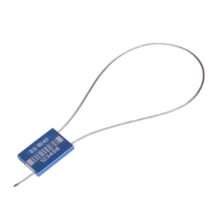
Security seals are one-time, tamper-evident devices that lock containers, trailers, valves and cash bags, because they show visible proof if a closure has been opened. In particular, high-security barrier types — bolt and cable — are classified to ISO 17712, which grades them as “I” (Indicative), “S” (Security) and “H” (High Security). Therefore, an ISO 17712 “H” barrier device is required for many international container shipments and for customs and C-TPAT programmes. In addition, metal versions include bolt, cable and metal strap types, each with a unique serial number for tracking. However, indicative plastic and metal plomben are used where tamper-evidence, not physical resistance, is the priority.
Types by ISO 17712 class
Because risk levels differ, the table below matches each type to its class and typical use.
| Type | ISO 17712 class | Typical use |
|---|---|---|
| Bolt | H (High Security) | Container doors, customs, C-TPAT |
| Cable | S or H | Trucks, tankers, valves |
| Metal strap / ball | I (Indicative) | Meters, bags, low-risk assets |
| Plastic / metal plomben | I (Indicative) | Utility, retail, tamper-evidence |
Frequently asked questions
Show FAQ
What is an ISO 17712 high-security seal? An ISO 17712 “H” barrier type, usually bolt or cable, meets defined tensile, shear and bending strength tests. Therefore, it is required for many container and customs shipments.
Bolt or cable? A bolt gives the highest barrier strength for container doors, whereas a cable suits valves, tankers and irregular hasps where a flexible steel wire is needed.
Are all metal versions high-security? No. Only devices tested and classified as “H” to ISO 17712 are high-security. However, indicative ones show tampering but offer little physical resistance.