
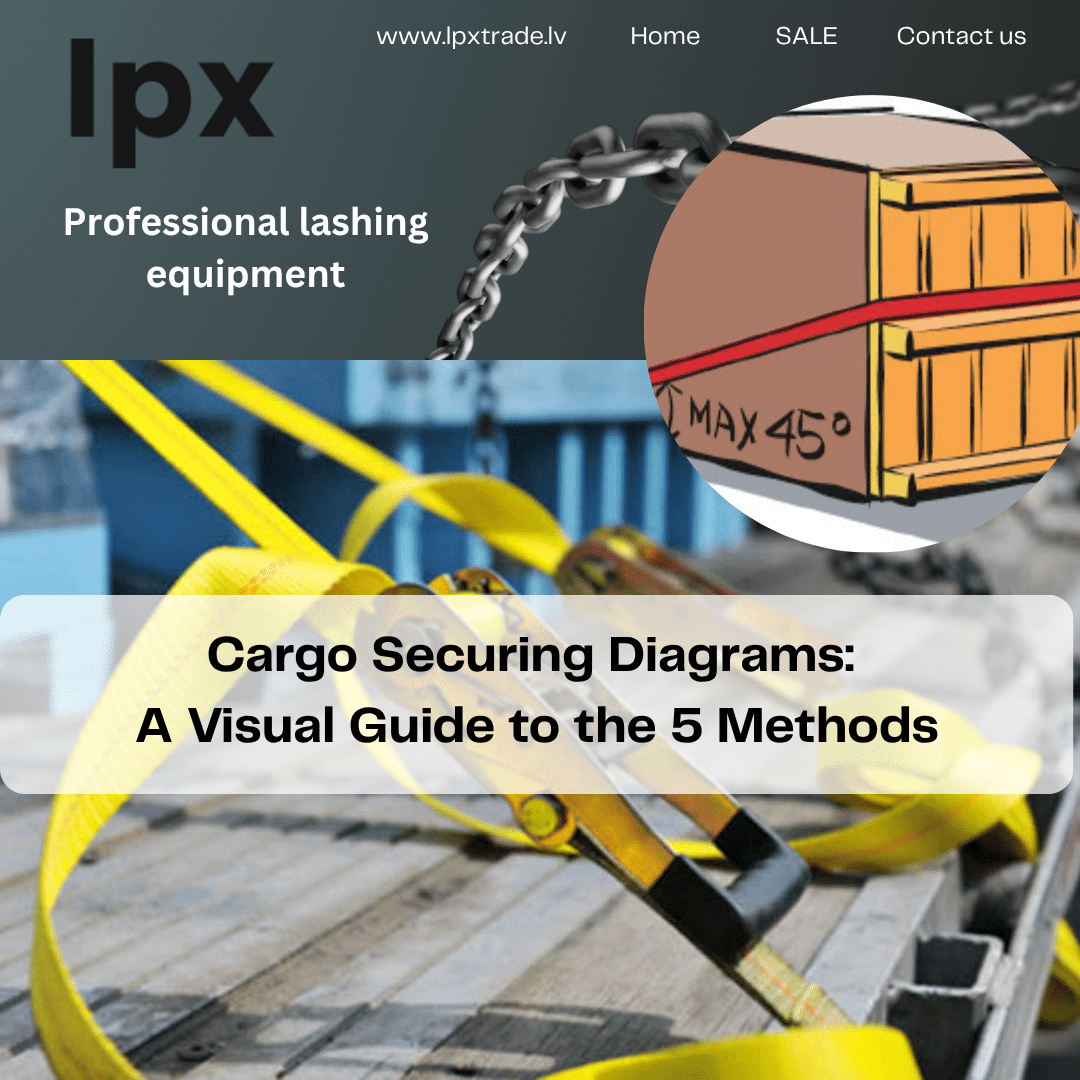
5 kaubakinnitusmeetodit
On viis kaubakinnitusmeetodid: Kinnituserihm (hõõrdejõud), diagonaalne kinnitus, silmuskinnitusrihm, Blokeerimineja vedru kinnitusrihmÕige kinnitusrihma valik on tähtsam kui koorma tugevalt kinnitamine: teekontroolil kontrollija vaatab, kas kasutati õiget meetodit ja kas töökoormuse piir on piisav — vale valik ja isegi tosina rihma ei päästa teid. See visuaalne juhend käsitleb kõiki viit: kuidas igaüks töötab, millal seda kasutada, põhilised nurgad ja kõige sagedamad juhtide vead. Kõik vastab EN 12195-1 Kinnituskõvad arvutamine ja EN 12195-2 Lintkinnitus
Sajad juhid on selle diagrammi juba salvestanud. Kas see on juba teie kabiinis? Printimisväljund ja hoidke käepärast — iga kontrolli korral teate, et iga rihmad on turvaliselt kinnitatud.
Kolm samba — kinnitus, blokeerimine ja turvamine
Standardi kohaselt taandub kaubakinnitus jõudude tasakaalustamisele kolmel viisil — iga allpool kirjeldatud meetod on nende meetodite variandid või kombinatsioon.
- Lukustamine Kaubakoor on täielikult kinnitatud kuju järgi (konteiner twist-lock lukudega). Rihmad tavaliselt ei ole vajalikud.
- Blokeering kaubakoormus on peatsendustis, seinale või pidurdile ja ei saa selles suunas liikuda
- Kinnitus Kaubakinnitus pingetud rihmadega, ketidega või trossidega. Uurige erinevaid koormakinnituslahendusi. Hõõrde- (kinnituserihm) ning otsene Kinnitusrihmad (diagonaal, silmus, vedru)
1. meetod — Hõõrduv kinnitus
Kuidas see töötab Rihm visatakse koormuse peale ja pingutakse, surudes koormuse tekile. Koormust ei hoida mitte rihm ise, vaid hõõrdejõud kaubast ja põrandast tekitatud vahe pingutusest
Peamised numbrid Siin on määrav arv STF Standardne tõmbejõud rihmatetiketil — mitte töökoormus. Rihm peab olema võimalikult vertikaalne: optimaalne nurk — 75–90°Kinnitusrihmade tõhusus langeb järsult kui nurk muutub — 30° juures jääb alles vaid pool jõust. Õppige surumismahtuvuse arvutamist. LC_eff = LC × sin αNurk ei ole detail, see on kogu meetod
Millal kasutada Universaalne kõrge hõõrdumisega kaupade kinnitamise meetod (karbid, kaubaalused, kotid) ilma ümberminekuta.
Tavaline viga Liiga lameda rihmaga ja ilma libisemisvastaste maatideta – hõõrdumiskoefitsient langeb ja sama palju rihmaid ei kinnitu enam.
Meetod 2 — Diagonaalne kinnitus
Kuidas see töötab Kinnitusrihmad otse koormusele Kinnitusrihmad fikseerivad kauba kinnituspunktide kaudu. Rihmad kulgevad põiki üle tekipunktide ja hoiavad koormust turvaliselt. LC (Kinnitusvõimekus) Teeb tööd
Peamised numbrid Miinimum 4 rihmad — kaks igal küljel, ristis. Vertikaalne nurk α ja plaanivaate nurk β peaksid olema 30–60° rihma tõhusaks tööks vajalik vahemik
Millal kasutada Raskeid, jäigaid kaubaid usaldusväärse kinnitustavaluga — masinaid, teraskonstruksioone, seadmeid. Nõuab professionaalset kinnitamist.
Tavaline viga Rihmade kinnitus juhuslikule väljaulatusele sertifitseeritud kinnituspunkti asemel on ohtlik. Punkt peab koormust taluma, muidu langeb enne rihma lahti.
Meetod 3 — Silmusega kinnitus
Kuidas see töötab Rihm moodustab Silmus koorma ümber Kinnitatud kahe vastaskülje külge. Silmus takistab kaubakõrvaliste nihkumist ja liigub sellega ühe ühikuna.
Millal kasutada Esemetegruppid, torud, puit, rullidid – kõik, mis laialiläheb. Kinnita turvaliselt. mitu silmust Pikkuse ulatuses, mitte ühes kohas
Tavaline viga Ühe silmuse kasutamine pikal paketil — keskosa nihkub siiski. Jaotage silmused paremini.
Meetod 4 — Blokeerimise pea juures
Kuidas see töötab Kaubakoor on tihedalt surutud eesmise peatala, seina või puit-/metallpeatuste vastu, mis tagab füüsilise Ei saa liigutada Lüngad täidetakse kiiludega või täispuhustavate kaitsepadudega.
Millal kasutada Kinnitusrihmad — kaubakindluse alus. Peatugikeha hoiab pidumisel, külgpeatused pööretes. Hädapidurdamisel võtab frontaalsein põhilöögit vastu.
Tavaline viga Lüngad on ohtlikud. Isegi 20–30 cm vaba liikumist tähendab, et kaubale kogunes kiirus ja see põrkub vastu eesseina — kinnitus töötab ainult pingul.
Meetod 5 — Vedru kinnitamine (ümberpaikumise vastane)
Kuidas see töötab Lingumi silmus visatakse koorma nurkale või ülemisele servale ja kinnitatakse tekile Kaks diagonaalset kinnitust Iga küljel olev vedru takistab ülemise kihi libisemist või edasipoole liikumist.
Peamised numbrid Nurk kaubapinnani ≤45° — sel viisil hoiab vedru kõige tõhusalt vastu ümberminekule.
Millal kasutada Kõrgelt virnastatud kaubad, mis pidurdamisel paigale kalduvad: mitmes kihis virnastatud kastid, paleteeritud kaup.
Tavaline viga Kinnitusrihmad kõrgete kaupade jaoks takistavad libisemist, kuid mitte ümberminekut. Kaldakalduse vastu on vaja vedrupingutusjuhtusi või tõkkeid.
Kaubakinnitus meetodid
| Meetod | Mis hoiab koormat | Põhireegel | Parim valik |
|---|---|---|---|
| Kinnituserihm | Hõõrdumine (STF) | Nurk 75–90°, kasutada materjale | Kastid, kaubaalused, kotid |
| 2. Diagonaalne | Rihm ise (LC) | Vähel. 4 rihmad, nurgad 30–60° | Rasketehnika, teras |
| 3. Silmus | Külgkinnitmine | Mitu silmust pikkuse jooksul | Torud, puit, rullid |
| 4. Blokeerimine | Tugi pea otsale | Ilma vahedeta — täitke tühjused | Iga koormuse alus |
| 5. Vedru | Ümbermineku vastupidavus | Nurk ≤45° | Kõrged kimbud |
Kuldne reegel: Kombineeritud kinnitusviisid: eesmine blokeerimine pluss kinnituserihm või diagonaalsed rihmad on norm. Üksik meetod harva kaitseb kõigilt jõu suundadelt.
Kontrollnimekiri enne väljasõitu
- Koormus toetub kabiinil või eesmisel peatussiduril
- Nurgad õiged — kinnitus 75–90°, vedru ≤45°
- Kõik pilu täidetud (tugirauad või kaitsepadjad)
- LC ja STF on rihmade siltidel selgelt loetavad, rihmad ilma muudatuste ja vigastusteta
- Meetod vastab kaubale — raske → diagonaal, kõrge → vedru
- Libisemiskaitsemadjad koormuse all
FAQ — kaubakinnitus meetodid
5 kaubakinnitusmeetodit
Viis koormakinnitusmeetodit on hõõrdesurumiskinnitus, diagonaalne (otsene) kinnitus, silmusekinnitus, blokeerimine ja vedruliikumiskinnitus. Hõõrdesurumiskinnitus toimib hõõrde kaudu, diagonaalne ja silmusekinnitus hoiavad koormust otseselt, blokeerimine kasutab füüsilist peatumispunkti nagu juhtkabiini kaitsekool, ja vedruliikumiskinnitus takistab kõrgete koormate ümberminekut. Enamik koormusi kasutab mitut neist meetoditest kombineeritult.
Milline nurk kinnituserihmale?
Kinnituserihma vertikaalne nurk peaks olema vahemikus 75° kuni 90° — võimalikult vertikaalne. Mida lamedamalt on rihm paigutatud, seda vähem surub see koormale: umbes 30° nurga juures säilib vaid umbes pool efektiivsest jõust, kuna töökoormuse piir arvutatakse valemiga LC_eff = LC × sin α.
Kui palju rihmaid diagonaalkinnitusel?
Diagonaalseks kinnituseks on vaja vähemalt nelja kinnitusrihma — kaks kummaltki küljelt, ristuvalt paigutatud. Nii vertikaalne nurk α kui ka plaanvaate nurk β peaksid olema vahemikus 30° kuni 60°. See meetod on ette nähtud raskete jäikade kaubale, nagu masinad ja teras, millel on usaldusväärsed, sertifitseeritud kinnituspunktid.
Mis vahe on LC-l ja STF-il?
LS (kinnitusmahtuvus) on rihma nimeline hoidesuurus ja on oluline otsestele kinnitamise meetoditele, nagu diagonaalne kinnitus. STF (standardne pingutajõud) on jõud, millega põrkmehhanism võib rihma eelnevalt pingutada, ja see määrab surumiskinnituse (hõõrdekinnituse) tõhususe. Mõlemad väärtused on märgitud rihma sildile daN-des, kus 1 daN ≈ 1 kg.
Milline kaubakinnitusmeetod on parim raskete kaubaveo jaoks?
Raskete jäikade kaupade puhul on diagonaalne (otsene) kaubakinnitus tavaliselt parim, kuna kinnitusrihm hoiab kaupa otse selle töökoormuse piiri kaudu, mitte ei toetu hõõrdumisele. Kombineerige seda peatseina vastu blokeerimisel, et esisein neelaks pidumisjõud. Üks kinnituserihm üksi harva piisab väga rasketele esemetele.
Kas mul on vaja libisemisvastaseid matse?
Jah, eriti kinnituserihma puhul. Libisemiskaitsevad matid tõstavad koormuse ja tekipinna vahelist hõõrdetegurit, mis on täpselt see, millele hõõrdemeetod tugineb. Ilma neita annab sama arv rihmu vähem pidamist ja võib-olla vajate rohkem rihasid sama koormuse kinnitamiseks.
Koostanud LPX Trade kauba kinnituse meeskond. Viimane uuendus 1. juuli 2026. Põhineb standardil EN 12195-1:2010 (AC:2014) ja EL-i parimaid praktikaid käsitlevatel juhistes maanteetranspordi kauba kinnituse kohta. Kõik LPX Trade kinnitusrihmad, kinnitusketid ja rigging-varustus on sertifitseeritud EN 12195-2 järgi ja TÜV SÜD poolt testitud — leiate meie kataloogist igale meetodile sobiva varustuse Kataloog.
LPX kaubakinnitus juhend A4
LPX kaubakinnitus kiirjuhend A4
LPX Kaubakinnitus juhend A4